Showing posts with label caseworkers. Show all posts

Tuesday, December 31, 2019

2019 Hiatus & Update

You might be in your final year of graduate school if. . .

You have only written four blog posts IN ONE YEAR!

Yep, I’m still here.  I’ve just taken a brief hiatus as I focus on balancing my graduate studies with my family life and working part-time.  I’ve been made painfully aware that it’s impossible to be “perfect” in all areas of one’s life- something’s got to give and be put on the back burner.  And this blog has definitely been put on the back burner over the past couple of years.


The good news is that I am starting to see the proverbial “Light at the End of the Tunnel” as this Spring I will be finishing up my graduate studies and required hours of supervised internship experience to receive my Masters in Social Work.   Eventually, after 4,000 MORE supervised hours and passing the licensing exam I will be an LCSW (Licensed Clinical Social Worker).

          I am currently working in my second internship placement and I am quite satisfied with both the population I serve and the work I am involved with.  I felt a loss last year, as well as a bit of guilt, when we came to the decision to close our foster care license after 12 years of fostering.  Then in 2019 I was presented with a job opportunity (at my current internship) which seemed to fill that particular “void” of helping children in the foster care system without necessarily being a foster parent.  

        At my current practicum placement I not only get to work with children and adolescents in the foster care system, but with their caseworkers, their foster parents, their biological parents (in some cases), as well as a few Guardians ad Liteums and judges on occasion.  More specifically, I have been trained to conduct mental health assessments and provide in-home therapy to these children and their families.  To learn more about the type of modality I’ve been trained in and use, which is both trauma-informed and attachment-based refer to this post.  Other modalities I draw from in my work with clients are Trauma-Focused Cognitive Behavioral Therapy (TF-CBT) Parent-Child Interaction Therapy (PCIT), and Trust-Based Relational Intervention (TBRI).
          Although I can’t and won’t give details about my experiences for obvious reasons, I’d like to provide some general observations (not necessarily in any particular order) of things I’ve learned over the past year in my therapeutic role to children and families impacted by being placed in state custody.  I feel like I could honestly write an individual post for each one of these observations, but for the sake of space and time these summaries will do for now:

-      Caseworkers have a tough job- witnessing a lot of emotional pain and having high caseloads.  It's challenging to work with clients who are court-ordered and don't believe they need any services.   It’s not surprising that child welfare workers have a heavy turnover rate.

-    I appreciate relatives who are able to step up and open their homes to becoming Kinship Placements- especially grandmas, who forfeit their role as grandparent to that of “parent” to their grandchildren in what could be their years of retirement.  In some cases, these grandmas are the bedrock and/or savior of their family

-      Parentification isn’t just about taking care of younger sibling’s physical needs: (getting them dressed or to school on time, and making sure they have enough to eat), but there’s an emotional aspect a well where the child feels responsible for their parent’s emotional needs.

-   Regarding parentification and patterns I’ve seen, many children from early to middle childhood (grade school) continue to worry about and feel false responsibility for their parents who are or have been absent from their lives due to substance abuse struggles and/or mental illness, and readily excuse and overlook any dysfunction on the part of their parents.  However, by the time these same children reach adolescence or young adulthood they are more prone to be filled with resentment for caring for younger siblings for so long and/or they become tired of having the roles reversed after constantly worrying about or covering for their parents for so long.

-      Attachment is everything.  Children can become hurt, broken, and damaged in relationships (especially in family relationships) but healing can take place with the proper interventions and resources, including supportive relationships.


-     So many disorders can be preventable because of early traumas and one’s family life.  One semester when I had a class delving into the DSM, I would find myself immediately jumping ahead to the section of “Risk Factors” for disorders to find just how many disorders are influenced or precipitated by neglect and abuse, including Oppositional Defiant Disorder, Conduct Disorder, Borderline Personality Disorder, Reactive Attachment Disorder (which is probably the most obvious) but trauma and stressor-related disorders and Depressive and Anxiety Disorders.  
-   
 I believe it’s more important to treat a person than a diagnosis.  And although diagnoses are helpful in formulating a Treatment Plan or understanding which symptoms to focus on (and are necessary for Medicaid reimbursement), a person is much more than their diagnosis.

-   I wish Developmental Trauma were an officially recognized DSM-V Disorder because although it has similarities with other traumas the attachment and trust component require such specialized care and a unique approach.


-      It is essential to understand that someone’s developmental age may be vastly different than their chronological age.  It was very insightful to me to read a very comprehensive neuropsychological evaluation of one of my clients from a developmental psychologist who measured different aspects of one’s IQ.  I realized that I needed to approach this client in a different way based on his developmental age.

-      Symptoms of ADHD and Trauma can look a lot alike.  Sometimes it’s hard to unravel the two- especially if both exist.


         (I got this graphic off of Pinterest- don't know where exact credit should go)

-      Just like “It takes a village to raise a child” , it takes a team to work together for children in foster care.  I’ve been able to attend Child and Family Team Meetings in a new role this past year- as a therapist versus a foster parent- but my observations are the same:  There are so many facets of support to a youth in state custody: physical health, mental health, schooling, other opportunities- that the more professionals and caregivers can step forward and come together in behalf of a child, the more hope and resources there are for the child.  


    I was touched to be able to attend one CFTM where not only the teacher and after-school coordinator of a client were present, but the principal of the school as well.  In a different meeting, a Transition to Adult Living Coordinator was there to help the youth who was preparing to age out of the system.  In other meetings nurses are ready to make sure all appointments or physical concerns are followed through with.  I even discovered that my state has a specific nurse assigned to oversee any youth who are prescribed psychotropic medications.

-      School is children’s work- where they spend most of their day.  Because of that, I’m grateful for trauma-informed classrooms and sensitive teachers.

-      Because I’m a social worker, I try to get the “big picture” of what’s going on in a client’s life: not just their mental health, but their physical health, their social environment, their school, etc.  Having said that, I would like to learn to incorporate more physically-based interventions (besides just deep breathing and meditation- maybe somatic experiencing or sensorimotor techniques) with my clients who have sleep problems- particularly insomnia, or who have a lot of muscle tension as a result of past traumas or whatever reasons.  I feel so frustrated for children and adolescents who can’t relax because muscle aches and insomnia seem like “old person problems”.  Many of these kids have tried melatonin which may help them get to sleep but they cannot sustain restful sleep.  And then they're expected to go to work (school) the next day and perform like nothing is wrong!

-      I use various assessment measures when conducting Mental Health Assessments with clients for the first time, but I recently started using the ACEs- not necessarily because it will give me a diagnosis, but because it helps me to gather a more complete social history of the client.  After one session this year, I was both amazed and saddened that I came across one client who had an ACES score of 9 (out of 10). He had experienced all but one of the adverse childhood experiences.  As I was driving home from work that night and the enormity of what my client had been through sunk in with me I wanted to cry.
    On a more hopeful note, here are some protective factors to help mitigate a high ACES score:


Saturday, July 27, 2019

The Child Protection Plan

Earlier this year my husband and I had the humbling and sobering experience of meeting with an attorney to draw up the papers for our personal Family Trust.  As part of the process, we had to come up with “nominations” of family members we trusted enough to become guardians to our children in the case that we both died or became incapacitated while our children were still minors. 

Part of the paperwork we had to fill out in our Trust included a document called a “Child Protection Plan” in which we also had to provide information for any possible future guardians of our children.  The name alone of the document, “Child Protection Plan”, sounded like some sort of form a child welfare worker would fill out, but rather than being filled out by a social worker, it was filled out by two parents concerned for the welfare of their children’s futures.  Some of the questions on the document we had to answer were:

“What values do you want instilled into your children?”

“What special holidays or observances would you like them to participate in?

“How would you like your children to be disciplined?”   (I had a whole list of books & theories for this question when, perhaps, the words “lovingly” and “just” would suffice.)

“What community or extracurricular activities would you like your children to be involved in?”

“What people do you want to be a part of your child’s life?”

It was a bit overwhelming to answer these questions because it really hit home what an enormous responsibility and commitment parenting is.  My husband and I found ourselves exploring topics such as “How are we doing raising our children?” and “What kind of legacy do we want to leave for our children after we’re gone?” 

It was also very depressing to think about not being able to be there for our kids when they need us the most.  I automatically equated the way I was feeling to how an expectant parent or birth parent might feel when choosing to make an adoption plan for their child and trying to decide what kind of a family or person to entrust with the sacred responsibility of raising their child.  What an incredible sense of loss and a huge relinquishment of control!  I saw the following quote last year and it helped me to get a glimpse of what it might be like to be a birth parent:


I also thought of what it would be like to be a parent whose children are taken into state custody: Who would I want my child placed with?  Do I even have a say in the matter?  Or, I imagined what it would be like to be an unwed mother in the “olden days” of unethical and unregulated adoption practices who had their child taken from them against their will (I’m knocking on wood that most of those horror stories were in the past and don’t currently exist).  In either case, I would be in a state of utmost panic for the sake of my child:  Would my child’s new caregivers be able to give them the care they need?  If they have children, will they treat my child as well as they treat their own children?

Whether you are a birth parent/first parent reading this who grieves for the child you brought into this world but whom you aren’t raising, or perhaps you had your children taken away from you and placed in foster care or have had to, by necessity, have family members step in and raise your children, and may be shouldering burdens of resentment, guilt, or grief . . .  I think there are some feelings any parent can relate to- namely, It’s tough- [whether you had a say in where your child ended up or if it was against your will and personal choice]- not to be able to raise your children the way you want- or perhaps, by whom you want.  It takes an extreme amount of trust that there are other people out there who have enough love in their hearts and room in their homes (and resources- because raising children isn’t cheap!) to commit to raising a child.

It is also a helpful reminder to those of us raising children who weren't ours to begin with to be mindful of their first families.

Thursday, February 14, 2019

Reflections on Instant Family

I finally got around to seeing Instant Family and I thought it was a good blend of accuracy and humor in portraying what foster-adoptive families experience.

Rather than give a complete plot summary, here are some scenes and themes I’d like to share which stood out to me in particular, as someone who has fostered and adopted children through the foster care system:

Fantasy Children vs. Reality Children- In a training class prior to becoming licensed foster care providers, members of the class were asked to do an exercise in which they drew their “fantasy” children on a chalkboard.  The social workers teaching the class instructed the foster parents in training to immediately erase their envisioned fantasy children and to prepare themselves for whatever comes next.

I think the theme of expectations versus reality is a universal one that almost anyone can relate to.  Sometimes the most difficult thing to do in life is to let go of our expectations, relinquish any perceived control of how we think things should turn out and accept- or make the best out of- what actually comes our way.

When applying the concept of control and predictability to fostering, I think many foster families or pre-adoptive couples may be set on only fostering or adopting children who are a certain age or gender (Or in the case of the movie’s character October, are looking specifically for a black, male, athletically inclined child who can get a full football scholarship, reminiscent of The Blindside).  It can be difficult to try to broaden preferences at the risk of getting out of one’s comfort zone and venturing into the unfamiliar.  However, Pete & Ellie did just that as they inquired about a teenager available for adoption- something Ellie initially openly verbalized against doing.

Foster Parents Supporting Each Other- The best source of support is someone who has been through the same thing or been in a similar situation; Therefore, I think that the best source of support and understanding for foster parents are other foster parents! 

Throughout the movie, Pete & Ellie meet in an adoption support group with other couples and individuals.  Although each couple’s reasons for wanting to pursue foster adoption was unique: some felt “called”, others were struggling with infertility, another couple was gay and thus couldn’t procreate, they all shared the desire to welcome children into their families.  It was humorous when the gay couple commented something to the effect of, “We’ve been trying to conceive for years with no success!”

I was particularly touched in one scene towards the end of the movie as the adoptive families had shared their personal struggles with each other and got to know each other better, when the gay couple announced to the group that their upcoming adoption would be official and the first people to go up and hug them was a conservative Christian couple, whom at the beginning of the training, showed through their body language, disapproval or discomfort about the gay couple adopting.

Once we take the time to get to know each other, it becomes evident that we all have more in common than we don’t have in common.

The Honeymoon Period- Speaking of holding on to a sense of “control” or predictability, I think some parents are under the false impression that if kids are well-behaved or turn out all right, then it is a direct reflection on their competency as a parent or caretaker.  Wrong! 

Pete & Ellie entered one of their support meetings with an attitude of “Hey- We have this under control- the kids aren’t acting out.  Things aren’t so bad!” and the other more experienced foster parents in the room were laughing or had smirks on their faces because likely, they had experienced the phenomenon referred to as “The honeymoon period” in which everything seems peachy-dandy with a placement.  The reality, however, is that a foster child’s behavior has less to do with structure and discipline of the home or parenting style, but everything to do with a mode of survival. 

Most people would think ‘It’s great that these kids aren’t acting out!” and admittedly, that is much easier than the alternative and it makes for a much more peaceful environment.  But it’s actually when the child starts acting out that they feel safe enough to do so.       
  
I recall the shock my husband and I went through when the honeymoon period ended with our first placement, who was typically a delightful preschooler.  When, after about three weeks of being in our home, he started being less delightful and talking back and complaining, we were worried.  I believe it was another more experienced foster parent that explained to us, even though it was hard, “That’s actually a good thing- he feels safe enough to be himself without the fear of any harsh consequences!”


Parentification- It was obvious that Lizzie, the oldest child of the sibling group Pete & Ellie were fostering, had taken upon herself the role of “parent” to her younger brother and sister, Juan and Lita.  It was interesting to observe the struggle it was for Lizzie to give up that parenting role and let her foster parents take over, especially when she knew her siblings better than Pete & Ellie did.  Equally of interest to observe was the conflict of loyalty Ellie felt with letting her foster mom be a “mother” to her without somehow betraying her own mother.


Ongoing Struggles with Adopted Children- I was very touched by the guest speaker the social workers invited to speak at one of the trainings the adoptive couples went through at the beginning of their training.  Brenda was an articulate and inspiring young woman who had a history of neglect and abuse, including being traded to her mom’s drug dealers for drugs, if I remember correctly. 

Brenda was accompanied to the meeting by her adoptive parents and spoke to the class about what it meant to her to be adopted as a teenager after spending years in foster care.  This young woman was so inspiring and I think that sometimes adoptive parents are under the impression that ‘There’s nothing LOVE can’t fix!” and that once a child is adopted it’s going to be the beginning of happily ever after.  The reality is that adoption does not erase the early experiences and traumas that a child had been through.  Neither will adoption erase a child’s genetics or predispositions. 

Later in the movie when Pete & Ellie are going through a rough patch with their teenage foster daughter, Lizzie, they seek out Brenda’s adoptive parents for some hopeful advice and direction. It was heartbreaking to hear Brenda’s adoptive mom share that her daughter was back in rehab when Ellie asks where she is. But I loved the mom’s retort to Ellie’s disappointment (the slap in the face was unexpected and humorous as well)!  Like a protective and loving Mama Bear, Brenda’s mom says something to the effect of “But look at where she came from and how far she’s come!”  A great reminder that unless we’ve been in someone else’s shoes we have no right to judge.  It’s also a good reminder that, as I mentioned earlier, no matter how stellar a parent is, adoption does not erase a child’s predispositions or former traumas.  This can be particularly frightening to accept when a baby or child is born addicted or exposed to drugs as addiction has such a strong genetic component, as well as when there is severe mental illness on one or both sides of a child’s family lines.

Conflicting Feelings About Birthparents- This is such a real struggle for foster parents!  Honestly, it’s one of the hardest things, other than the grief of reunifications, that I’ve had to deal with while fostering. 

At one point in the movie’s storyline, foster mother Ellie says to her husband, “She looks so normal.” regarding their foster children’s mother when they meet for a visit.  Ellie recognizes that their mom is just that- a mom who loves her children.  Yet it’s hard to think of someone who would endanger their children as “normal” or sometimes, even deem them worthy of having a relationship with their children.  After all, this woman set the children’s home on fire from a lit crack pipe!

But behind someone’s criminal history or case file is a person.  It’s harder to judge someone when you look them in the eyes and meet them in person.  I also think it was telling that the children’s biological mother was also a product of the foster care system as one of the caseworkers remarked, “She never learned how to appropriately care for her children.”

In another support group meeting Rose confesses to feeling guilty for wanting her kid’s biological mother to fail- especially after all of the work she and her husband have gone through to care for these children and open up their home to them.  I’ve been there and have felt guilty for thinking the exact same thing.  It’s such a difficult task as a foster parent to recognize that family preservation is the goal while also noting, “Look at what these kids have been through and look at the life we could give them!”

Overall, I would highly recommend the movie Instant Family to anyone over 13 (the PG-13 rating was appropriate) and I am grateful that the director chose to draw on his life’s experiences to highlight the crucial, yet often overlooked issues of fostering and foster care adoption.

Wednesday, December 19, 2018

ReMoved#3- Love is Never Wasted

Nathanael Matanick has done it once again!  I watched ReMoved 3 yesterday and was particularly impressed with the grief portrayed by the little boy, his mother, and the foster mother.*

I also appreciated the portrayal of the complexities of differing opinions family members have when considering opening up your home to a foster placement as well as the positive and negative affects a child could have on other children in the home.

Other observations: 8:10 killed me!

I remember in one training, our trainer pointed out that even though a child may come to your home in clothes wreaking of smoke or other not-so-pleasant odors and substances, or they may have a tattered blanket or raggedy stuffed animal which they can't seem to part with, it is imperative that foster parents are mindful that these items may be the only "connection" to home that these children may have.  Scent, in particular, is very evocative of memories and people.  What could be an innocent and well-meaning attempt by a foster parent to simply sanitize an item or piece of clothing could, in reality, "erase" the comfortable and familiar scent a child has of his home and caregivers.


* Skip this next paragraph if you don't want a possible spoiler:

I was curious to know just how long this little boy stayed with his foster family.  I was totally surprised and touched at 15:40 because I figured the foster mom was a relative rather than a "stranger" who showed she cared.

The world needs more people who show they care!


Friday, June 22, 2018

Reuniting Families and Fostering Immigrant Children

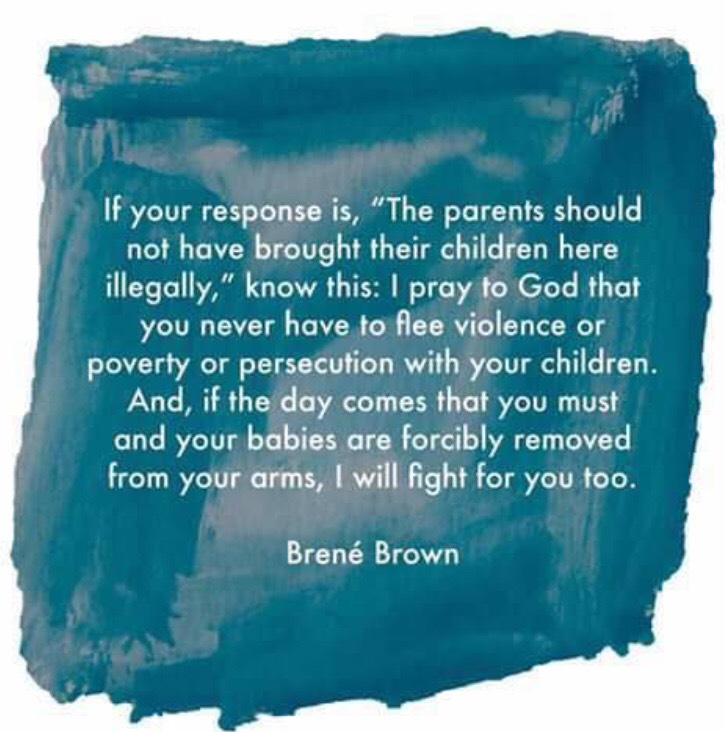
I expressed my concerns over migrant children being separated from their parents at the U.S. border in my last post, but I guess I'm not done because I have a few more concerns:

Concern #1: How are all of the children who have been separated from their parents going to be reunited with them?

June 20th's Executive Order will put a stop to separating families at the border but how will all of the families who have been separated be "put back together"?  It is my understanding that the U.S. government does not have any concrete plans to reunite these families.  However, I was pleased to learn that some businesses are taking a stand to prevent further separations:

-United Airlines, American Airlines, and Frontier Airlines are refusing to transport babies and children ripped from their parents; you can read about it HERE


It's refreshing to hear about businesses, organizations, and people making proactive efforts to reunite families, especially when there is so much heartache and debate surrounding this issue.  Maybe I need to take a break from watching the news or getting on social media- which leads me to my next concern:

Concern #2- Can we please stop politicizing children and come together regardless of our political party affiliation or loyalties and seek solutions for these children? 

I see the wisdom in Governor John Kasish's recent statement when he said, "This is a humanitarian crisis, so let's put politics aside, bring everyone to the table, and craft a real way forward."


I am not only concerned, but disturbed when people are more concerned about proving which administration's policy "created" the problem in the first place, rather than coming together to create solutions for these displaced children.  I think a good question for anybody who feels passionately about this crisis, including myself, should ask themselves is, "Where is my passion/anger/outrage coming from?  Am I more concerned about proving that I'm "right" or am I actively seeking solutions for displaced children or secure borders? (or whatever your biggest personal concern happens to be.)  

Perhaps I'm too idealistic or moderate, but I, for one, don't believe it's simply a dichotomy of "safe borders" versus "humane treatment for immigrants".  Both are valid concerns and not mutually exclusive.  Historically, administrations from both major U.S. political parties have enacted legislation to solve these problems.  Sometimes the legislation has been effective and other times it has created unintended consequences and more problems.

Some examples of major immigration legislation include the Flores Settlement Law, signed by Bill Clinton in 1997, which required unaccompanied minors who arrive in the U.S. to be released to their parents, a legal guardian, or an adult relative.  If there are no relatives available then a government agency appoints an appropriate adult to look after the child.  Although that particular legislation related to unaccompanied minors (versus minors traveling with family) such legislation focused on "family first".

In 2008 George Bush signed an anti-trafficking statute, The William Wilberforce Trafficking Victims Protection, which required unaccompanied minors to be transferred out of immigration centers within 72 hours.  The purpose of this bill was to protect immigrant children being brought over to the United States by sex traffickers and to provide such children a full immigration hearing (to decide if the child qualified for asylum or not).  As worthy and needful as this legislation was, it actually backfired and caused an increase in unaccompanied immigrant children from Central America (notably Guatemala, Honduras, and El Salvador where poverty and gang violence and crime are rampant).  This is because immigration cases are so backlogged that it could take years for a case to be heard.  In the meantime, these minors would be in limbo in the U.S.  

Fast forward to 2014 when Barack Obama tried to keep families together who crossed the border illegally into special "family detention centers".  This was a worthwhile goal but the unintended consequence was that it violated the policy of keeping children out of jail-like settings (even if they are with their parents).  A federal judge made the ruling and as a consequence, families were released into the United States pending notification of their immigration hearings.   This began the immigration policy sometimes referred to as "Catch and Release."

I use these examples to show that if one asks the question "Whose fault is this- the Republicans or  the Democrats?" you will not get a simple answer.  It's much more multi-faceted.  Both parties, under different administrations, have tried their best to deal with immigration and detention issues.  My hope is that policy makers can look into bipartisan and evidence-based practices in an attempt to discover what has worked and what has backfired and what policies or legislation will cause the least harm to children and families.

Concern #3- Reunification of displaced children and their families should take priority over adoption.

 The catchphrase and hashtag for advocates of not separating families at the U.S border is "Families Belong Together."


I am pro-family reunification IF it is in the child's best interest.  I am also pro-adoption provided it is done ethically.*

I've heard comments and concerns from those both within and outside of the foster and adoption community about how to go about fostering or possibly adopting an undocumented child (with parents or unaccompanied).  I have inserted myself into at least one of these conversations with the same information I shared back in this post:


 Which leads me to the question of:  What happens to children who are separated from their families at the border?

If I'm understanding the process correctly, These children are placed into the custody of the Department of Health and Human Services (HHS) who then turns them over to their Office of Refugee Resettlement whose job is to place " unaccompanied alien children" in the "least restrictive setting that is in the best interests of the child." while the parents of the children await prosecution of federal misdemeanor charges or until they can be united with a relative or placed in a foster home.  ORR has shelters throughout the United States which are run by non-profit organizations.  
  
  Each state has different ways of handling things but in my state the largest agency which places refugee children into foster care does so only after an extensive search for relatives has taken place- which could take years.  Because of this, most of the children available for placement are older rather than the babies and toddlers currently detained in "Tender Age Shelters"

  I'm aware of other agencies in states like Michigan, Texas, and California who place children in more of an emergency foster placement until family can be located.  And for any who are looking into fostering an unaccompanied alien child (I'm not a fan of the term "alien" but that's the legal term), here is a snippet of FAQ page from ORR:


Concerning ethical adoption practices and displaced children, I couldn't agree more with this statement made today from Chuck Johnson, CEO of National Council for Adoption, concerning Children Being Held at the Border:

"Children who are unaccompanied or have been separated from their parents or guardians at the U.S. border are not—nor should they be considered—candidates for adoption by American citizens. This is consistent with National Council For Adoption’s long-held position regarding the adoption of children in times of crisis, such as war, earthquakes, and other catastrophic natural or man-made disasters in which children are separated from their families.
"Adoption is only a possibility for children for whom parental rights have been terminated or for whom there is clear evidence that they are orphaned. Based on NCFA’s understanding of the status of these 2,000+ children, few, if any, meet these criteria. For those who would be eligible for adoption, there are a number of options that could provide them with permanent, family-based care. NCFA has always supported a continuum of child welfare outcomes that prioritizes (in order) family preservation, adoption by relatives, and domestic adoption in a child’s native country all before intercountry adoption options are considered. It is paramount that the identities of these children be clearly ascertained and who and where their parents are is verified.
"Our hearts are with these children and we hope that those involved in determining their futures will act with integrity, care, and compassion."
If YOU have experience advocating for or working with agencies that foster children from other countries please leave a comment or message me so that I can learn more as we seek for solutions for these vulnerable children!

 * In the event that anybody wants to leave a nasty comment or send me hate mail, save us both some time and read this first:

 I know there are anti-adoption/family preservation AT ALL COSTS critics who could make the argument, "But you've adopted- your kids didn't get to stay with their first families!"  To which I would reply, "Yes- I have adopted.  The birth mother of our oldest child went through an agency through her own free will and placed her child for adoption because it was important to her that her baby be raised in a family with a mom and a dad (among other things).  It was important to us that the agency we went through provided counseling to expectant parents considering adoption both pre- and post-placement.   

Our younger children were adopted through the foster care system after their mother relinquished her parental rights a year and a half after they were placed in our care.  During that year in a half they were in our care as foster children we supported the plan for reunification with their family and both biological parents were given more than one chance, with services provided, to get their children returned to their custody.
In addition to the children we have adopted who are no longer with their first families, we have been a resource to many other families (the majority of our foster children) in caring for their children while they work to get them back.

"Suffer the Children to come unto Me . . . Unless"

Some of the most heartbreaking experiences I have had as a foster parent are trying to comfort a newly placed foster child in my home as they cry out for their parents.  Nighttime is invariably the hardest time and intensifies the anxiety, confusion, grief, and trauma that these children experience as a result of being separated from their families through no fault of their own. 

If the child is old enough to ask “Why can’t I be with my parents?” or “When do I get to see mommy?” I can usually offer up a sufficient explanation since most of the children get to see their family at least once a week at supervised visits.  If the child's parent is in prison or jail or doesn’t show up to their scheduled visits, then it makes it much harder for me to offer up an explanation or appease the child.  In the case of babies and toddlers who aren’t verbal but are obviously distressed, sometimes all I can do is hold them as they cry, try to provide comfort, and just be with them in their grief.

I’ve observed that a common justification of Trump’s new Zero Tolerance Policy which has separated over 2,000 children from their families at the border since May 1, 2018 has been “Parents in the U.S. break the law every day and they get sent to jail.  Their kids go to family or are placed in foster care!” 

I have issues with this statement for a couple of reasons.  These are my concerns:

First, seeking asylum is not breaking the law, under 8 US 1158 Code.

   In order to apply for asylum through the United States Citizen and Immigration Services, you have to cross into the U.S. and THEN present yourself to an authority and start the application process.  Under the new Zero Tolerance Policy* children are separated from their family as their parents await their asylum hearing. 

Do some people cross our border and falsely apply for asylum even if they don’t meet the qualifications?  Certainly, but that’s precisely what immigration judges and hearings are for. 

I value keeping the law and keeping our borders secure, but under this new policy, asylum protections no longer exist for individuals fleeing their country (namely women and children) from domestic abuse or rampant gang violence EVEN IF they come to the U.S, at a legal entry point .   

Consider the words of a friend of a friend who does pro-bono asylum work as an attorney in Texas:  “There is not practically a legal route to come to immigration from many Central and South American countries.  The wait for unskilled persons from those countries is over 100 years long in some cases, so there is not, practically speaking, a way to immigrate legally.  Many of these immigrants being separated from their children are asylum seekers.  The legal process for seeking asylum in the US is that you show up here and then you apply, NOT application first and then immigration.  These immigrants are legal asylum seekers and they are being separated from their children while there asylum applications are processed, which can take years.  These people’s stories are devastatingly heartbreaking.  Rape.  Murder.  Gang and drug violence.  These people are risking everything to give their children a chance.”


Second,  My rebuttal to the “Parents in the U.S. break the law every day and they get sent to jail.  Their kids go to family or are sent to foster care!” argument is "Precisely- their kids go to family or are placed in foster care, they are NOT separated from their parents and sent to detention warehouses or tent cities."

As a foster parent and graduate student of social work, I am much more familiar with U.S. Child Welfare Policy than U.S. Immigration Law.  I’ve seen firsthand that even when a child is in a safe and loving foster home it is still traumatic for them to be separated from their parents.  The abundant research shows that kids do better psychologically and physically in the least restrictive, most “home-like” environment rather than an institution (and preferably with kin, if possible).  

          As for incarcerated parents, at least they can be kept abreast of where their children are and how they are doing.  If their child is placed in foster care and not in the care of relatives, they have the resources of caseworkers or legal counsel to give them updates about their children.  Even if they can’t afford a lawyer they can consult with a public defender about their rights and have due process in court hearings.

Third, children being separated from their parents under ANY CIRCUMSTANCE is of concern!

 Whether children are separated from their parents as a result of their parents fleeing the country and seeking asylum or illegally crossing the border or even being incarcerated or homeless, the children who are left behind deserve our compassion.  Period.    


Just as no child has a choice as to if they’re born into poverty or wealth, children are not responsible for the choices their parents make.  Unless it’s not in the best interest of a child, families deserve to be together.   Foster care is set up to reunify families and give them another chance to be together.   

As a foster parent it is not my job to make judgments about the parents of the children in my care (though it’s been a temptation I've succumbed to at times) but, rather, to love and care for these children as if they were my own until they can return to the care of their parents, if possible.  

When we got a call about a prospective placement we don’t base our willingness to care for the child based on if the parents have a clean background- in fact, the majority of the children who are placed in our home have come into state custody precisely because their parents need some extra help and resources and they don’t have a clean criminal record (most often because of drug charges and domestic violence issues).

   Children need to be cared for and nurtured regardless of their parent’s citizenship status or criminal record.   Jesus said, “Suffer the little children to come to me”  NOT “Suffer the children to come to me unless their parents have tried to cross the border illegally or only if their parents have documented citizenship or can provide for them or have spotless background checks, etc.”

Fourth, when a child is separated from their parents they can suffer both short-term and long-term effects which can alter their brain chemistry and potentially their ability to form healthy attachments later in life.

I don't have the time here to recount attachment studies or go into the details of how the brain and limbic system respond to trauma, but many parents who have adopted or cared for children coming from "hard places"- environments of abuse and neglect or institutions and orphanages- deal with the very real repercussions sometimes on a daily basis, as do the teachers, social workers, therapists, or medical professionals who work closely with these children and their parents.

  If anybody thinks that separating a child from their parents is "no big deal" because it happens all the time, I think you would feel much differently after doing everything in your power to try and comfort a crying child in the middle of the night when they've been removed from their family.  

*U.S. IMMIGRATION POLICY BACKGROUND/CLARIFICATION- I am sharing these facts and sources courtesy of Michelle Martin who is a PhD and policy specialist from Cal State Fullerton: 

-The policy to separate parents and children is new and was instituted on 4/6/2018.  It was the brainchild of John Kelly and Stephen Miller to serve as a deterrent for undocumented immigration, approved by Trump, and adopted by A.G. Sessions.  Prior administrations detained migrant families, but didn’t have a practice of forcibly separating parents from their children unless the adults were deemed unfit.  https://www.justice.gov/.../pres.../file/1049751/download...

- In 1996, President Clinton passed the Illegal Immigration Reform and Immigrant Responsibility Act, which made unauthorized entry into the US a crime (typically a misdemeanor for first-time offenders) but under both Republicans and Democrats, these cases were handled through civil deportation proceedings, NOT criminal proceeding, WHICH DID NOT REQUIRE SEPARATION.  And again, even in cases where detainment was required, FAMILIES WERE ALWAYS KEPT TOGETHER IN FAMILY RESIDENTIAL CENTERS UNLESS the parents were deemed unfit.